
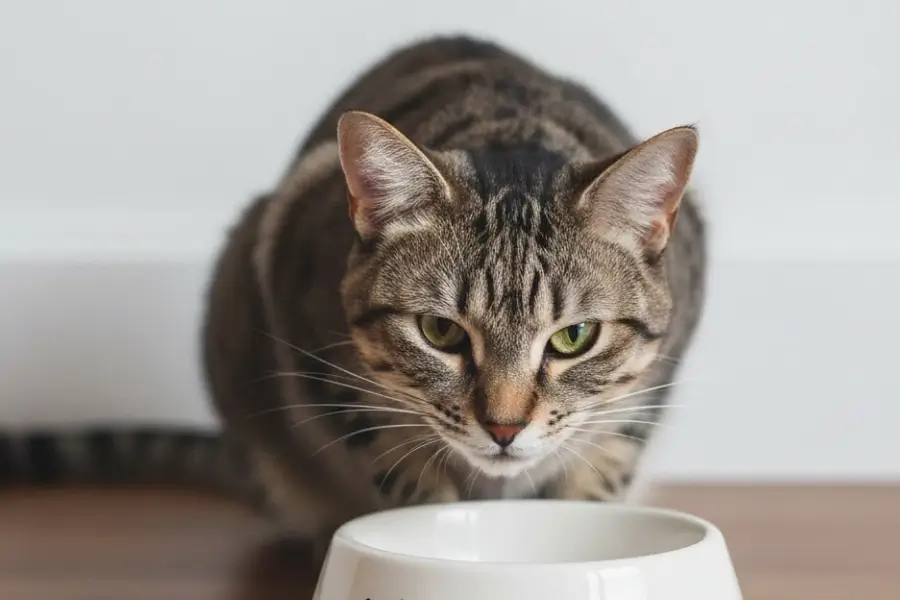
Cats are creatures of subtle communication, and sometimes, their discomfort can manifest in ways that are easily overlooked by even the most attentive owners. One such phenomenon, often misunderstood or entirely unknown, is “whisker fatigue.” If you’ve ever noticed your cat reluctant to finish their food, batting pieces out of their bowl, or acting fussy around mealtime despite being hungry, their feeding bowl might be the silent culprit.
This article delves into the fascinating world of cat whiskers, explains what whisker fatigue is, and offers practical solutions to ensure your feline friend’s dining experience is as comfortable and stress-free as possible.
The Incredible World of Cat Whiskers
To understand whisker fatigue, we first need to appreciate the extraordinary role whiskers play in a cat’s life. Far from being just decorative hairs, whiskers (scientifically known as vibrissae) are highly sensitive sensory organs. Each whisker is deeply embedded in a follicle that is rich in nerves and blood vessels, making them incredibly sophisticated touch receptors.
Cats use their whiskers for a multitude of functions:
– Navigation: They help cats navigate in the dark and judge the width of openings, ensuring they can fit through tight spaces.
– Hunting: Whiskers detect subtle air currents and vibrations, helping cats pinpoint prey, even in complete darkness.
– Balance and Orientation: They contribute to a cat’s impeccable balance and spatial awareness.
– Communication: The position of a cat’s whiskers can indicate their mood, forward for curious or happy, flattened for fearful or aggressive.
Essentially, whiskers are a cat’s highly tuned radar system, providing vital information about their immediate environment.
What is Whisker Fatigue?
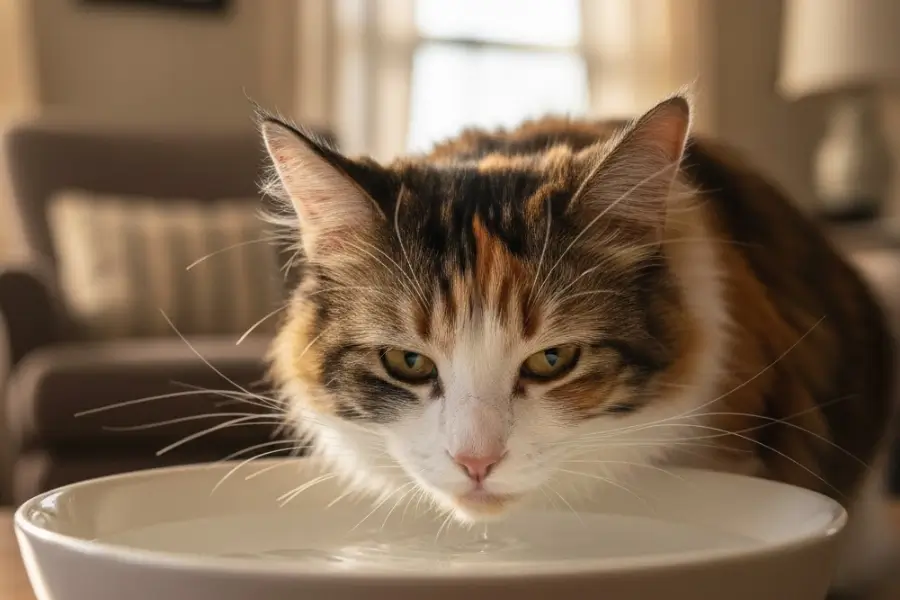
Whisker fatigue occurs when a cat’s whiskers are repeatedly stimulated or bent over an extended period. Because whiskers are so sensitive, constant contact or pressure can become overwhelming and even painful.
Imagine trying to navigate a crowded room with sensitive antennae that are constantly brushing against obstacles. After a while, that constant sensory input would become irritating and exhausting. For a cat, repeatedly bumping their whiskers against the sides of a deep or narrow food or water bowl can cause a similar sensation.
Signs Your Cat Might Be Experiencing Whisker Fatigue
If your cat is suffering from whisker fatigue, you might notice one or more of the following behaviors:
– Reluctance to Eat or Drink: They might approach their bowl but then hesitate, paw at it, or only eat from the very center, leaving food around the edges.
– Scooping Food Out: Many cats will try to avoid the bowl altogether by using their paw to scoop food onto the floor before eating it.
– Head Tilting or Eating from the Side: They might contort their head into awkward positions to avoid their whiskers touching the bowl.
– Aggression Towards the Bowl: Some cats may even show signs of irritation or mild aggression towards their bowls.
– General Fussiness Around Food: While hunger might be present, they seem stressed or unhappy at mealtime.
– Hesitation at Water Bowl: Similar to food bowls, deep water bowls can also cause whisker fatigue, leading to reluctance to drink.
The Solution: Whisker-Friendly Bowls
The good news is that resolving whisker fatigue is usually a simple matter of changing your cat’s feeding and watering dishes. Look for bowls designed with cat comfort in mind:
– Wide and Shallow: This is the most crucial characteristic. The bowl should be wide enough that your cat’s whiskers do not touch the sides when they are eating or drinking. Shallow bowls also mean they don’t have to bury their face as deeply.
– Material Matters: While plastic is common, some cats can develop “chin acne” from plastic bowls. Ceramic, stainless steel, or glass bowls are generally better choices as they are easier to clean and non-porous.
– Elevated Bowls: For some cats, especially older cats or those with arthritis, an elevated bowl can also improve comfort by reducing strain on their neck and joints. However, ensure it’s still wide and shallow.
Other Considerations
– Cleanliness: Always keep your cat’s bowls spotless. Residual food or water can be off-putting and contribute to fussiness.
– Multiple Water Sources: Cats often prefer to drink from fresh, moving water. Consider a cat water fountain, and ensure any standing water bowls are whisker-friendly.
– Separate Bowls: If you have multiple cats, provide individual food and water bowls to prevent competition and allow each cat to eat at their own pace without stress.
Conclusion
Your cat’s whiskers are a vital part of their sensory world, and understanding their sensitivity can significantly improve their quality of life. If you suspect your cat is experiencing whisker fatigue, making a simple switch to wider, shallower bowls can alleviate their stress and transform mealtime into the peaceful, enjoyable experience it should be. Pay attention to your cat’s subtle cues, and you’ll discover a deeper connection to their unique needs.













0 Comments