
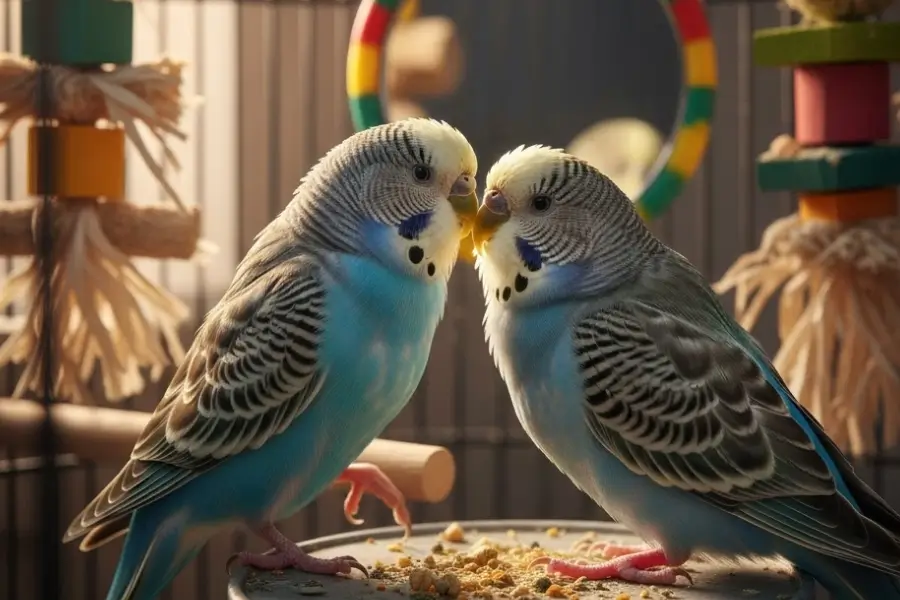
The sight of a small parakeet “chatting” happily to its reflection in a mirror toy is endearing to many bird owners. These shiny trinkets are popular items in pet stores, often marketed as a way to keep single birds company. However, what might seem like innocent fun can actually have detrimental effects on your parakeet’s psychological well-being and overall health. The question, “Are mirror toys actually bad for your parakeet?” is met with a resounding “yes” from most avian veterinarians and experienced bird behaviorists.
To understand why mirror toys can be problematic, we need to delve into the social nature of parakeets (budgerigars) and how they perceive their own reflection.
The Social Needs of Parakeets
Parakeets are highly social flock animals by nature. In the wild, they live in large groups, constantly interacting, preening each other, and communicating through vocalizations and body language. They form strong bonds with their flock mates and rely on these interactions for their sense of security and well-being.
When a parakeet is kept alone in a cage, it lacks this essential social interaction. As intelligent and emotionally complex creatures, they will seek companionship wherever they can find it. This is where the mirror toy comes in.
The Illusion of a Companion
To a parakeet, its reflection in a mirror is not just a pretty image, it genuinely believes it’s another bird. This “mirror friend” offers the illusion of companionship, but it’s a deeply unsatisfying and ultimately damaging relationship. Here’s why:
– One-Sided Interaction: The “mirror bird” never responds appropriately. It doesn’t preen back, share food, or engage in genuine social behaviors.
– Constant Frustration: The parakeet will try to solicit attention, courtship, and even mating behaviors. When these efforts are met with no genuine response, the bird can become increasingly anxious.
– Hormonal Imbalance and Health Issues: For both male and female parakeets, an intense attachment to a mirror can trigger hormonal imbalances.
– Males: Can become extremely territorial and aggressive. They may regurgitate food for their reflection excessively, leading to crop issues and malnutrition.
– Females: Can become chronically hormonal, leading to constant nesting behaviors and excessive egg-laying, which significantly shortens their lifespan.
– Prevents Bonding with Humans: A bird obsessed with its mirror image is less likely to bond with its human caregivers.
– Malnutrition: If a bird spends all its time guarding or feeding its “mirror mate,” it may neglect its own nutritional needs.
Signs of Mirror Obsession
How do you know if your parakeet is becoming overly attached to its mirror toy? Look for these common signs:
– Excessive Vocalization: Constant chirping, chattering, or even screaming at the mirror.
– Aggression: Lunging, biting, or hissing at you when you approach the cage.
– Regurgitation: Repeatedly regurgitating food onto the mirror or nearby perches.
– Territoriality: Guarding the mirror fiercely, preventing you from cleaning that area.
– Repetitive Behaviors: Pacing back and forth in front of the mirror or head bobbing.
– Lack of Interest in Other Toys/Humans: Ignoring other enrichment items.
– Feather Plucking: In severe cases, chronic stress can lead to feather plucking or self-mutilation.
What to Do Instead: Provide Real Companionship
The solution to a single parakeet’s loneliness is not a mirror but real companionship.
– Get a Second Parakeet: The best solution is to get another parakeet. Having a real feathered friend provides genuine social interaction.
– Increased Human Interaction: If a second bird isn’t possible, you must become your bird’s primary flock mate. Talk to them, sing to them, and offer treats.
– Rotate Toys: Provide a variety of stimulating toys made of wood, paper, and natural fibers. Foraging toys are excellent for mental stimulation.
– Enrichment: Offer opportunities for showering, listening to music, and exploring outside the cage in a safe, bird-proofed room.
The Verdict: Remove the Mirror
If your parakeet currently has a mirror toy, it’s best to remove it. Be prepared for some initial confusion or distress from your bird, as they will “grieve” the loss of their perceived companion. This is a temporary phase. As you replace the mirror with genuine interaction and stimulating toys, your parakeet will adjust and become a happier, healthier, and more well-adjusted companion.












0 Comments