
Bringing a ferret into your home is an exciting adventure. These slinky, energetic creatures are bundles of joy, curiosity, and, let’s be honest, a fair amount of mischief. Their boundless energy and inquisitive nature mean that a standard home is full of potential hazards. To ensure your new companion stays safe and sound, a thorough ferret-proofing mission is essential. Think of it as child-proofing, but for a toddler who can squeeze through a one-inch gap and climb curtains!
This comprehensive guide will walk you through the process of securing your home, room by room, identifying common dangers, and providing practical solutions to keep your fuzzy friend out of harm’s way.
The Ferret Mindset: Why Proofing is Crucial
Before we dive into the practicalities, it’s helpful to understand how a ferret sees the world. Ferrets are naturally burrowing animals. They love tight spaces, dark corners, and tunnels. Their flexible bodies allow them to contort into impossibly small openings. A general rule of thumb is that if a ferret can get its head through, the rest of its body can follow.
Furthermore, ferrets explore with their mouths. They are prone to chewing on rubber, soft plastic, and foam, which can lead to life-threatening intestinal blockages. Ferret-proofing isn’t just about protecting your belongings, it’s about protecting your ferret from itself.
General Home Safety Tips
Start by getting down on your hands and knees to view your home from a ferret’s perspective. You’ll be amazed at the number of potential escape routes and hazards you spot from down there!
– Seal All Gaps: Inspect baseboards, walls, and floors for any holes larger than an inch. Seal them with wood or wire mesh. Don’t rely on caulk, as ferrets can chew through it.
– Secure Doors and Windows: Ensure all windows have secure screens free of tears. Install door sweeps on exterior doors to prevent escapes.
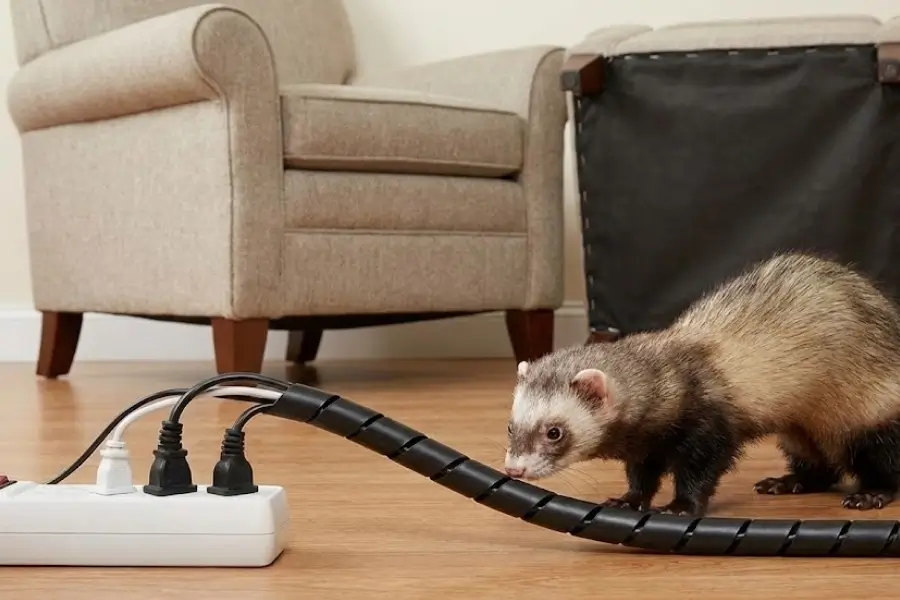
– Protect Electrical Cords: Encase all accessible electrical cords in protective tubing like split-loom conduit.
– Beware of Reclining Furniture: Recliners and sofa beds are notorious ferret traps. The mechanisms underneath can crush a ferret. Consider covering the underside of couches with heavy fabric or wood panels to prevent access.
Room-by-Room Ferret-Proofing
The Kitchen and Laundry Room
These rooms are particularly hazardous due to appliances and chemicals.
– Block Access to Appliances: Ferrets can squeeze behind refrigerators, stoves, and washing machines. Use wooden planks or wire mesh to block off these areas.
– Check Before You Close: Always check inside the dishwasher, washing machine, and dryer before closing the door. Ferrets love to nap in piles of laundry.
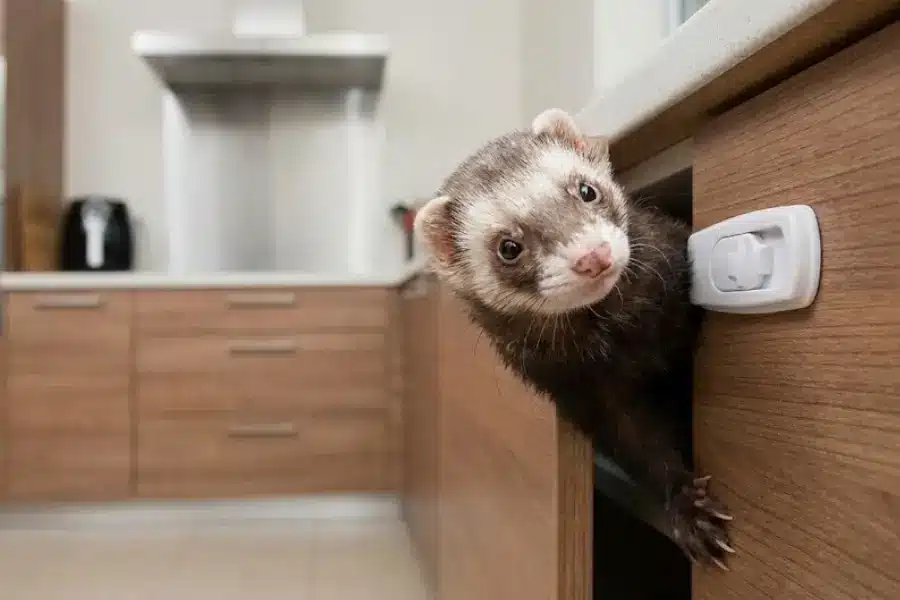
– Secure Cabinets: Use child-proof locks on all lower cabinets, especially those containing cleaning supplies or trash.
– Cover Drains: Ensure all sink and floor drains have secure covers.
The Bathroom
– Toilet Safety: Keep the toilet lid closed at all times. A ferret can easily fall into a bowl and drown.
– Secure Cabinets and Drawers: Use child-proof locks on vanity cabinets. Keep medications and toothpaste well out of reach.
– Block Access to Plumbing: Check under the sink for gaps around pipes and seal them off.
The Living Room and Bedroom
– Houseplants: Many houseplants are toxic to ferrets. Remove them or place them in inaccessible locations. Ferrets also love to dig in the dirt.
– Small Objects: Keep keys, wallets, and jewelry off the floor and low tables, as ferrets will steal and stash them.
– Chewable Items: Be mindful of rubber or foam items like remote control buttons and shoe insoles, which are prime targets for chewing.
A Safe Haven
Even with the most thorough ferret-proofing, it’s impossible to eliminate every single risk. The safest approach is to create a designated “ferret-proofed room” or play area where your ferret can roam freely under supervision. This room should be completely devoid of hazards, allowing your ferret to explore and burn off energy safely.
Conclusion:
Ferret-proofing is an ongoing process. As your ferret grows and explores, it may find new and creative ways to get into trouble. Stay vigilant, observe your ferret’s behavior, and adapt your safety measures as needed. With a little effort and foresight, you can create a safe and happy home for your curious companion.













0 Comments